
What is figurative art in the context of contemporary interior design? Many people assume that art must be either a photograph-like portrait or a wild splatter of colors. However, the world of fine art is much broader than these two extremes. Figurative works occupy a vital middle ground that brings life to a modern home. At Jzine Art, we believe that understanding this style helps you choose pieces that truly speak to your experience.
The Core Definition of Figurative Works
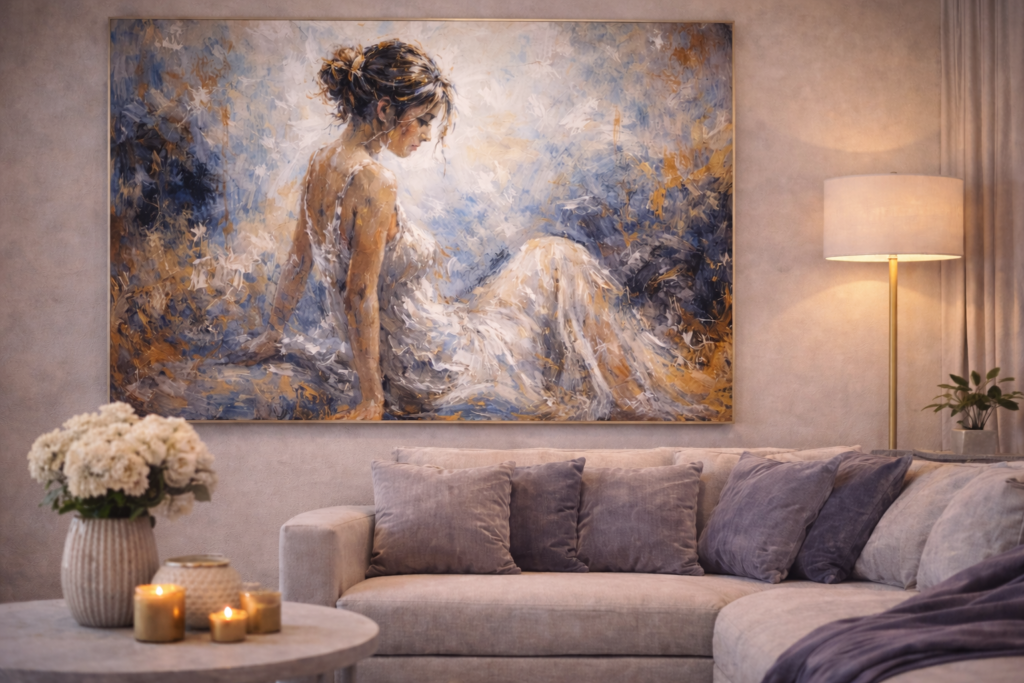
To truly grasp the concept, we must look at the relationship between the canvas and reality. Figurative works are defined by their reference to the real world. Unlike pure abstraction, which relies only on color and form, this style features recognizable subjects. These subjects can include people, animals, or even inanimate objects.
Distinguishing Figurative from Realistic Art
It is important to note that figurative does not always mean realistic. A painting can be figurative without looking like a photograph. The artist might distort the shapes or use unnatural colors, yet the subject remains identifiable. This distinction is crucial for collectors who want a piece that feels grounded but still possesses an artistic edge.
The Evolution of the Human Form in Art
Throughout history, artists have used the human figure to express complex emotions. From the statues of ancient Greece to the distorted figures of the 20th century, the goal remains the same. The figure serves as a mirror for the viewer. When you ask what is figurative art, you are really asking how artists translate the human experience into a visual medium.
The Emotional Power of Figurative Art

There is a specific psychological comfort found in recognizable subjects. We are biologically wired to recognize faces and bodies. This makes figurative art an excellent choice for a living room or bedroom. It creates a sense of presence and companionship within the space. While a landscape might be beautiful, a figure adds a narrative element that pulls the viewer in.
Creating a Story Within Your Space
Every figurative piece tells a story. Even a simple silhouette can evoke feelings of loneliness, joy, or contemplation. This storytelling aspect makes the artwork a conversation starter for guests. Instead of just admiring the colors, viewers begin to wonder about the subject. This depth is what separates a curated home from one that is simply decorated.
Bridging the Gap with Figurative Abstract Painting
For the modern homeowner, the hybrid style is often the most appealing. A figurative abstract painting blends the recognizable subject with the freedom of abstract techniques. This style allows the artist to capture the essence of a person or object without being tied to literal details. It provides a sophisticated look that fits perfectly with minimalist architecture.
The Balance of Form and Freedom - What is Figurative Art?
In a figurative abstract painting, the background and the subject often merge. The artist might use heavy textures or bold brushstrokes to obscure parts of the figure. This requires the viewer to engage with the piece to “find” the subject. At Jzine Art, we find that this style offers the most longevity for collectors. You never tire of looking at it because you see something different every time.
Placement Logic for Modern Home Decor
Choosing where to hang these pieces requires a strategic approach. Because these works have a “presence,” they can dominate a small wall. Large-scale figurative works are best suited for open walls where they can act as the primary focal point.
Scaling Art for the Living Room
If you are looking for modern home decor that feels substantial, consider the height of the subject. A vertical figurative piece can make your ceilings feel taller. Conversely, horizontal works that feature multiple figures can help ground a long sofa or a dining table. Always ensure the eyes of the subject are roughly at your eye level to maintain a natural connection.
Lighting and Texture in Figurative Works
The impact of a painting changes based on how the light hits the canvas. Original paintings often feature layers of paint that create shadows around the figure. This physical depth is what makes the art feel alive. Use directional lighting to highlight these contours. This will make the figure pop from the background and enhance the overall mood of the room.
The Business of the Art World
Many collectors are curious about how these beautiful works move from the studio to the gallery. In the modern era, the path is increasingly digital. Artists must now balance their creative time with the technical side of their career. This includes everything from website management to understanding digital marketing for artists in a competitive landscape.
How Artists Reach Modern Collectors
The internet has democratized the art world. You no longer need a physical gallery to discover a breathtaking figurative abstract painting. By leveraging online platforms, artists can connect directly with people in Karachi or New York. This direct connection ensures that the artist’s vision remains pure and the collector gets a truly original piece.
Conclusion: Starting Your Collection
Understanding what is figurative art opens up a new world of design possibilities. By moving beyond simple patterns, you can bring a human touch to your modern interior. Whether you choose a clear representational piece or a bold figurative abstract painting, you are investing in a piece of the human story.
At Jzine Art, we take pride in creating works that resonate on a personal level. Our collection is designed for those who value craftsmanship and emotional depth. Explore our latest arrivals today and find the figurative piece that will turn your house into a curated home.